The hardware startup ecosystem in Latin America is growing rapidly. However, one of the biggest challenges remains production. Launching a physical product without owning a factory, without heavy upfront investment, and without relying on large import volumes seemed impossible just a few years ago. Today, 3D printing for hardware startups in Latin America makes it possible to validate, manufacture, and scale products without disproportionate financial risk.
Additive manufacturing has become a strategic tool for technology companies looking to reduce costs, accelerate development, and maintain operational flexibility.
The Challenge of Manufacturing Hardware in LATAM
Startups developing electronic devices, IoT products, or industrial solutions face structural barriers. Traditional injection molding requires molds that can easily cost $10,000 or more. In addition, international suppliers often demand high minimum order quantities, forcing companies to produce hundreds or thousands of units before validating market demand.
International logistics adds another layer of complexity. Importing from Asia can take 30 to 60 days, delaying product launches and affecting cash flow. Any design modification often requires retooling or additional investment.
For this reason, searches such as rapid prototyping for startups in Latin America and industrial 3D printing services in LATAM clearly reflect strong commercial intent within the B2B segment.
How to Launch a Product Without a Factory Using 3D Printing
Industrial 3D printing enables functional prototypes to be produced in just a few days. This significantly shortens development cycles and accelerates validation with real customers or investors. Instead of investing heavily in tooling, startups can manufacture a pilot batch and iteratively improve the design.
The ability to produce small batches is critical. Low-volume manufacturing with 3D printing in Latin America eliminates the need for minimum order quantities and allows companies to produce anywhere from 20 to 200 units without locking up excessive capital. This approach is ideal for market testing, pilot programs, or controlled product launches.
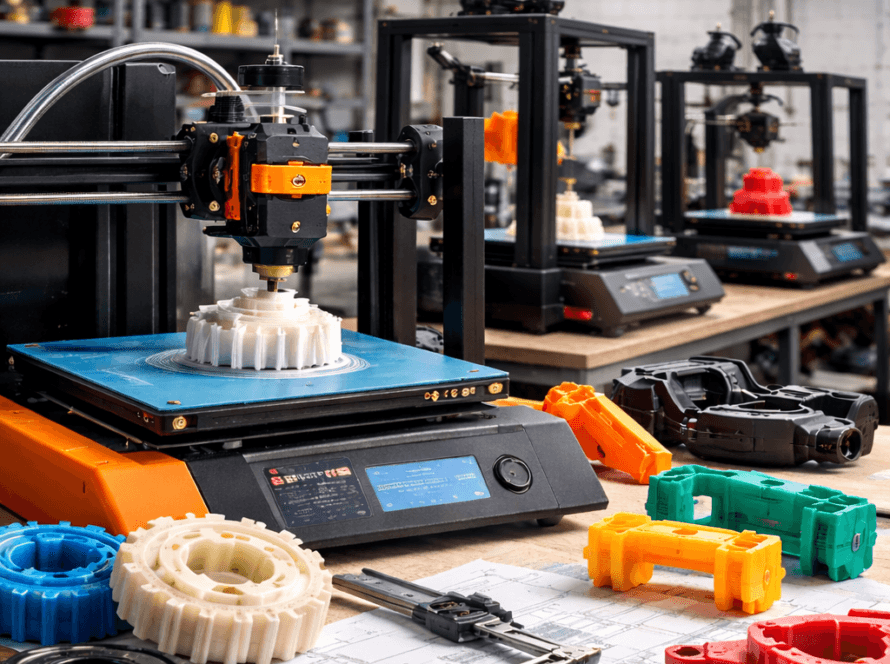
3D printing is also widely used for manufacturing electronic enclosures, functional components, technical mounts, and structural parts. The growing demand for 3D printing of functional parts for companies in LATAM shows that businesses are seeking real industrial solutions, not just prototypes.
3D Printing Technologies for Hardware Startups
Choosing the right technology depends on the product’s technical requirements and intended use.
FDM technology is well suited for functional prototypes, mechanical testing, and structural validation. It allows for durable parts at controlled costs.
SLA technology provides high precision and excellent surface finish, making it ideal for investor presentations or commercial demonstrations.
SLS technology is commonly used for strong nylon components and low-volume production runs with near-industrial performance. It is an effective solution when durability and dimensional stability are critical.
Selecting the right process within a 3D printing service for industrial prototypes in Latin America directly impacts product quality and market perception.
Strategic Comparison: Overseas Manufacturing vs. 3D Printing in LATAM
When comparing traditional overseas manufacturing with local 3D printing, the differences are significant. International production involves long lead times, high minimum volumes, and limited flexibility for design changes. In contrast, local 3D printing enables production within days, rapid design adjustments, and gradual scaling based on real demand.
For startups at the pre-seed or seed stage, reducing time-to-market can make the difference between securing investment and missing the opportunity.
When to Scale to Mass Production
3D printing does not fully replace injection molding when volumes exceed several thousand units per month. However, it is the ideal solution during early stages for demand validation, design optimization, and early revenue generation.
Once product-market fit is confirmed, companies can transition to traditional manufacturing methods with greater financial confidence.
3D Printing as a Competitive Advantage in Latin America
The rise of nearshoring and the need for more resilient supply chains are driving growth in additive manufacturing services for companies in Latin America. Startups that integrate 3D printing into their production strategy gain speed, flexibility, and operational control.
The increasing demand for 3D printing services for companies in Mexico, Panama, Colombia, and Chile reflects a clear trend toward regional production and reduced external dependency.
Conclusion
3D printing for hardware startups in Latin America is not just a technical tool. It is a strategic approach to launching products without a factory, minimizing risk, and accelerating growth.
If your company is developing a physical device and requires rapid prototyping services for businesses in LATAM, additive manufacturing can be the first step toward a successful product launch without excessive upfront investment.
Request a business quote by sending your STL file or technical drawing. We work with startups and technology companies across Latin America to transform ideas into real, market-ready products.
———————————————————————————————————